About us
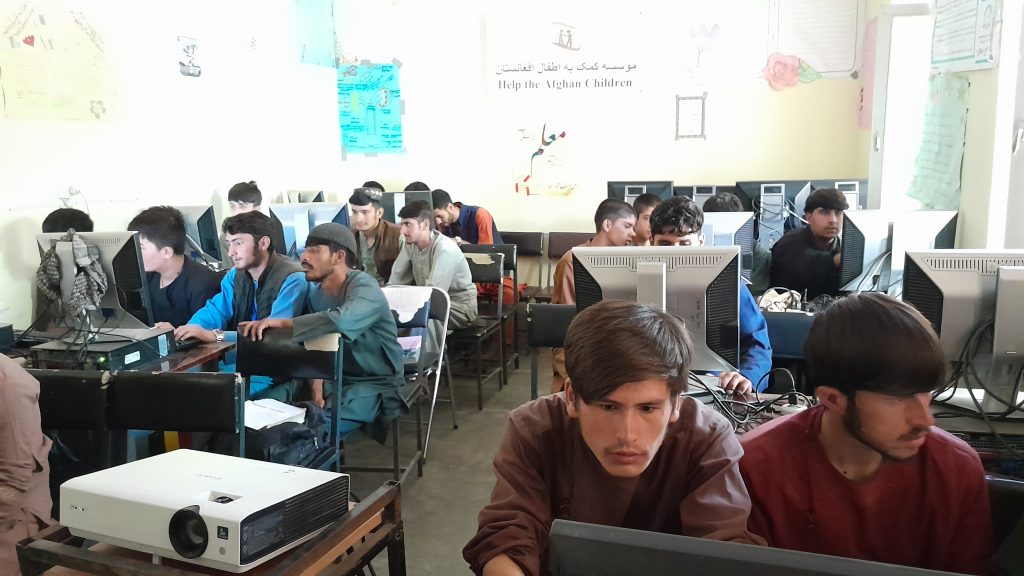
Help the Afghan Children (HTAC) is a non-profit, non-partisan, national organization that was established in 1993 in response to the dire conditions faced by Afghan families during Afghanistan’s civil war. HTAC was officially registered in 2005 with Afghanistan’s Ministry of Economy as a national non-governmental organization (registration # 261). HTAC is also a member of the ACBAR coordination body in Afghanistan. HTAC is governed by an independent Board of Directors, which sets the overall direction and priorities of the organization and its development programs. At HTAC, we have been providing continuous educational, livelihood, child protection, relief, and humanitarian support to Afghan families and communities for over 30 years. We are committed to educating, protecting, and empowering a new generation of Afghan children to become proud, productive citizens and future leaders of their country. HTAC’s main office is located in Kabul, with sub-offices in Balkh, Jawzjan, and Sar-e-Pul provinces.
Mission
Our mission is to empower girls, boys, and local communities by promoting innovative educational, child protection, livelihood, and humanitarian programs that enhance their lives and help them become productive citizens
Vision
We envision an Afghanistan where all children have equal rights to education and are able to fully contribute to building Afghanistan’s civil society
Our Values
-Equity and Inclusion -Respect for cultural divers -Accountobility & transparency -Commitment & Efficiency -Cooperation & Team Work
For over three decades, HTAC has been dedicated to empowering Afghan children and communities through equitable access to education, protection, and sustainable development. We exist to break cycles of poverty, violence, and inequality by fostering resilience, peace, and self-reliance.
In the short term, Help the Afghan Children (HTAC) aims to enhance immediate access to education, child protection, and livelihood programs by strengthening community-based education, providing vocational training for women, and improving child protection mechanisms. The organization will also focus on delivering emergency humanitarian aid and expanding peace education initiatives to instill values of cooperation and non-violence among children and communities
Medium and Long Term Objectives
Mid-Term Objectives:
- Strengthen and expand community-based education programs to reach more children in underserved areas.
- Enhance child protection networks and advocacy to reduce violence and child labor.
- Improve vocational training programs for women and youth to support economic empowerment.
- Develop teacher training initiatives to enhance the quality of education.
- Expand peace education and conflict resolution programs across schools and communities.
- Strengthen partnerships with local and international organizations for resource mobilization.
Long-Term Objectives:
- Establish sustainable education and child protection systems that integrate into national frameworks.
- Promote gender equality in education and economic participation through long-term policy advocacy.
- Build resilient communities that independently uphold child protection and education standards.
- Contribute to national efforts in reducing illiteracy and improving educational infrastructure.
- Advocate for lasting peace and social stability through community-driven initiatives and policy reforms.
- Strengthen institutional capacity for long-term sustainability and program effectiveness.
Our Principles